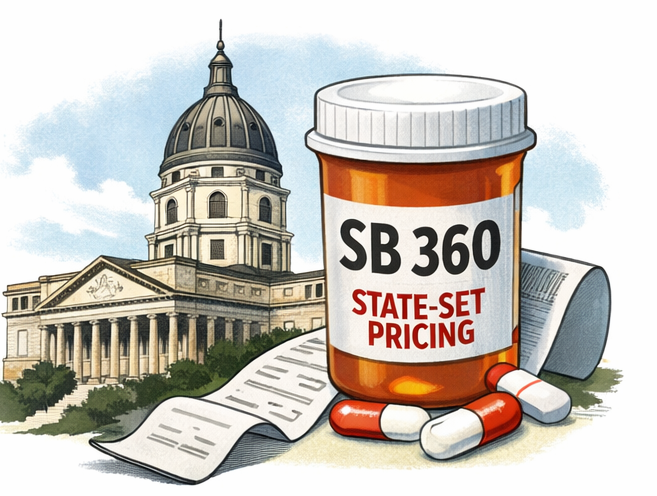
At first blush, Senate Bill 360’s attempt to “fix” prescription drug pricing might sound appealing: protect pharmacies, promote transparency, and lower costs. Unfortunately, buried in this well-meaning rhetoric is a classic example of government price controls — a misguided policy that risks doing far more harm than good. Kansas legislators should reject the $10.50 dispensing fee mandate in
SB 360 because it amounts to a pill tax on Kansans, undermines free markets, and distorts the very competition we want to foster.
Let’s be clear: SB 360 would require pharmacy benefit managers (PBMs) to reimburse pharmacies at or above a state-set reimbursement floor, pegged to a reference price like the National Average Drug Acquisition Cost (NADAC), plus a professional dispensing fee of $10.50 per prescription. Proponents call this a “fair rate” and claim it protects local pharmacies. But mandating a fixed fee in state law is not fairness, it’s price fixing.
Price controls don’t reduce costs, they shift them. Economics 101 teaches that when government dictates prices or fees, those costs don’t vanish; they are transferred somewhere else in the system. In this case, employers and ultimately patients will bear the burden. This $10.50 requirement will be tacked on to the price of drugs, meaning patients and payers will pay more out of pocket or through higher premiums.
A state-mandated dispensing fee overrides the competitive negotiations that should occur between PBMs and pharmacies. In the market today, PBMs and pharmacies (often through their own hired negotiators called Pharmacy Services Administrative Organizations) haggle over rates, service levels, and value. If a pharmacy provides superior service or convenience, it can command a higher rate. If it doesn’t, it must innovate or risk losing business. That dynamic encourages efficiency and keeps costs in check. Mandating an arbitrary fee removes incentives for innovation and competitive improvement. Why strive to reduce costs if a legislated floor guarantees revenue regardless of performance?
Price controls also inflate costs where none need exist. Low-cost generic drugs, the very prescriptions that make healthcare more affordable, will be hit hardest. Adding a flat $10.50 fee to a $5 generic prescription doesn’t just eat into savings, it effectively triples the cost. Consumers aren’t just buying medicine, they’re buying a bureaucratically-mandated surcharge that has nothing to do with the actual market value of the service rendered.
This isn’t hypothetical. Similar proposals in other states have drawn criticism from businesses and workers alike that such dispensing fee mandates act like a tax on every prescription, raising overall drug spending for employers and health plans. Reports from other jurisdictions show that prescription fee mandates can lead to millions in added costs annually, with those costs cascading down to patients and employers.
Finally, we must ask: who benefits from price controls like this? Not patients. Not small businesses. Not truly transparent markets. Price controls invariably benefit entrenched interests that can absorb regulatory costs while smaller competitors struggle to adapt. Instead of imposing broad rate mandates, policymakers should focus on real market reforms like eliminating barriers to patient-friendly mail order prescription deliveries, stopping patent abuse by drug manufacturers, increasing access to generics, and empowering policymakers and consumers with information and choice.
SB 360’s dispensing fee might be well-intentioned, but intentions do not replace economic principles. Kansas should reject this looming pill tax and embrace free enterprise, not government mandates that treat symptoms while making the disease worse.
— Helen Van Etten, former Republican National Committeewoman for Kansas
Read more:
https://kaninfo.com/legislature/op-ed-price-controls-wont-fix-rx-drug-costs/